In our world, Kowloon Walled City was demolished in 1993. In this one, it survived — and swallowed Hong Kong whole.
CHAPTER 01 THE DIVERGENCE — 1989
The eviction was set for the winter of 1989. The last 8,000 holdouts barricaded the alleys — welded the stairwells, flooded the ground floors, hung the old demolition notices back up like battle flags. With the world's cameras already fixed on Hong Kong that year, neither London nor Beijing wanted the footage.
The demolition was suspended pending review. The review never came. The Handover came instead — and the City, built to be temporary, built to be erased, learned the most important lesson of its life: it could survive anything.
CHAPTER 02 THE SPREAD — 1998–2040
When Kai Tak Airport closed in 1998, the 14-story height limit vanished overnight. The City doubled upward in a decade — concrete poured at night, no permits, just consensus and rebar.
Then rents broke formal Hong Kong, and neighboring districts began building the Kowloon way. Sham Shui Po first. Then everywhere. The government still exists. It just routes around. Official maps show a grey blur labeled "special administrative zone."
Four million people. One continuous fused structure. The largest ungoverned city on earth.
CHAPTER 03 THE CITY IN 2083 — DISTRICT SCHEMATICS
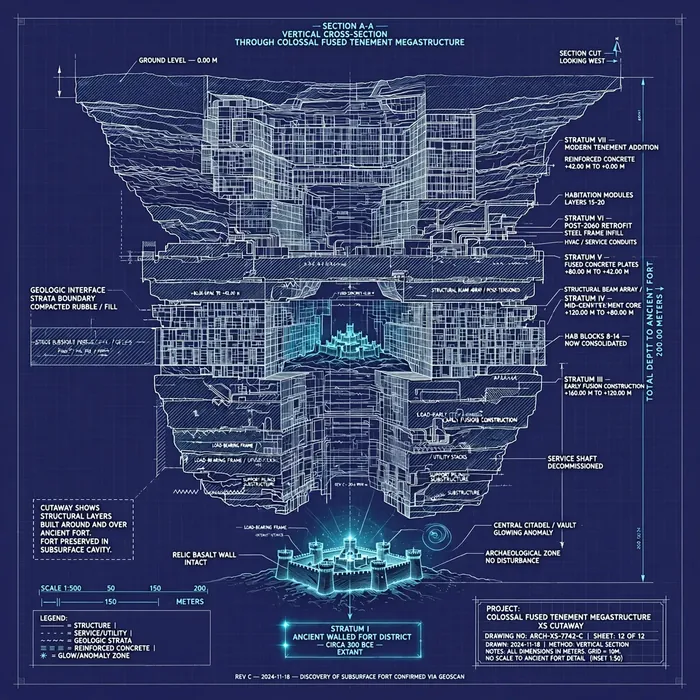
THE OLD CORE
The original 2.6 hectares, buried 200 meters deep. No daylight in ninety years. The 1993 demolition notices rest under glass in a noodle shop — pilgrims touch the glass for luck.
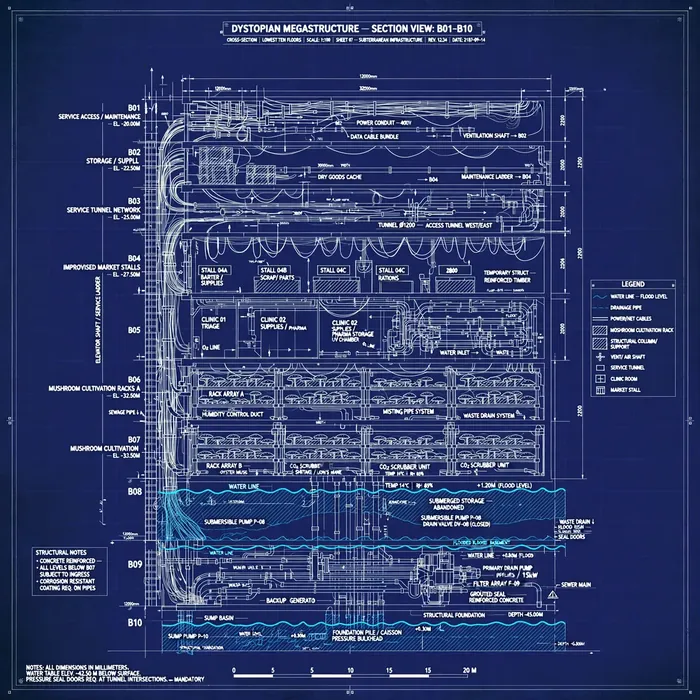
THE UNDERSTACK
The sunless bottom floors. Mushroom farms in flooded basements, black clinics, night markets that haven't closed since 1991.
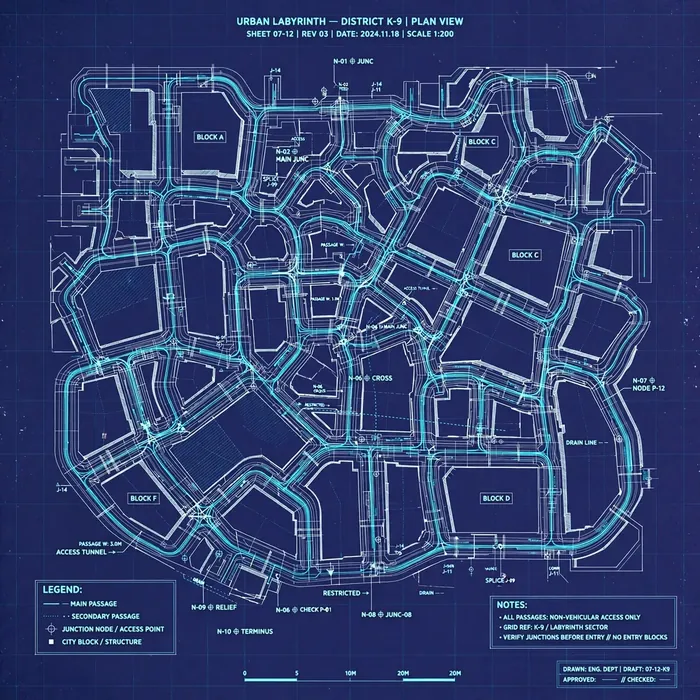
THE VEINS
Three thousand kilometers of alleys, some no wider than a shoulder. Every Vein has a name, a smell, and an unwritten law.
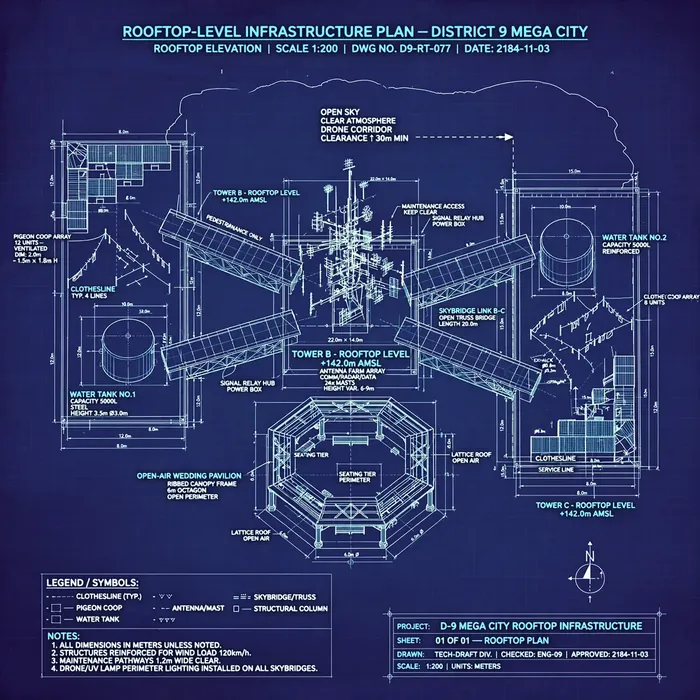
THE CANOPY
The rooftops — the only place you can see the sky. Pigeon races, antenna farms, wedding halls rented by the hour.
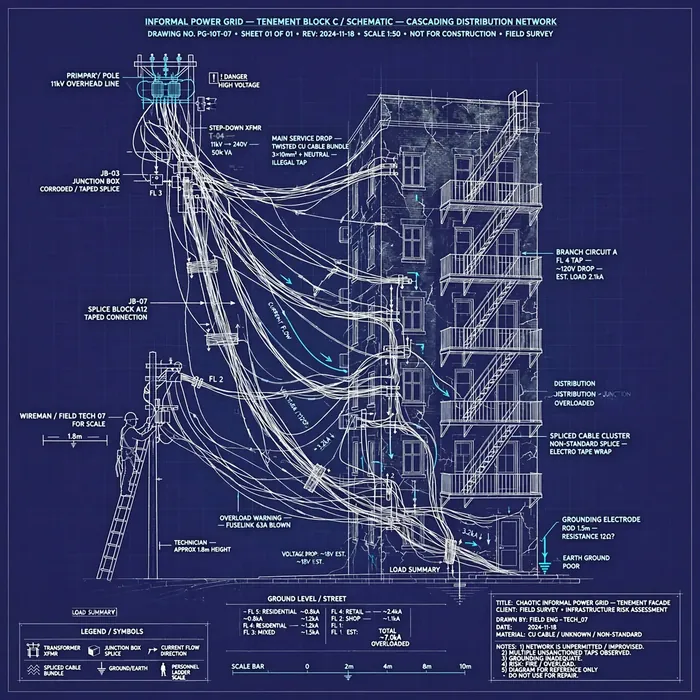
THE TANGLE
The power grid. The largest informal electrical network ever built, spliced wire by wire over a century, tended by the wiremen's guilds.
TAP ANY PLATE TO VIEW IT LARGE
Star anise, ozone, wet concrete, frying oil. Mahjong tiles, dripping water, the 6pm generator hum. Neon is the streetlight. Rain is the infrastructure.
CHAPTER 04 THE CITY IN 2083 — HEARTS
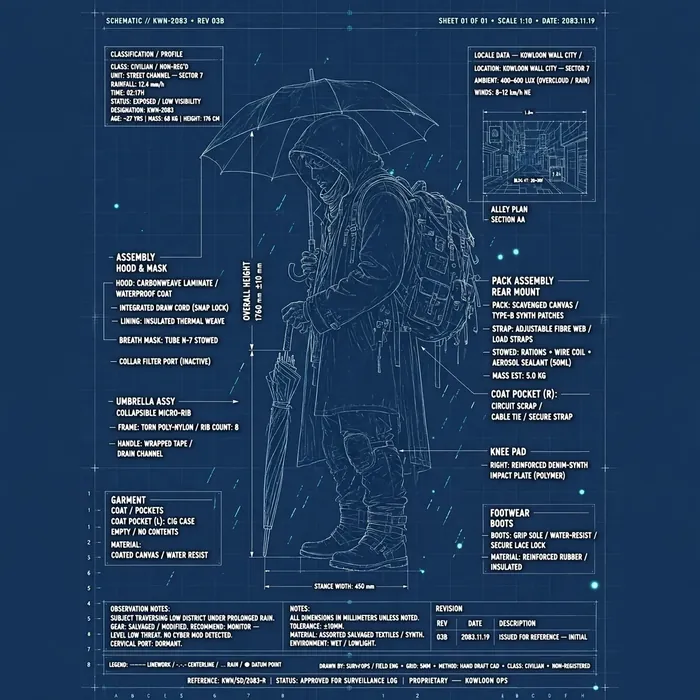
THE SLUM DWELLER
Long overcoat, hood up, backpack, umbrella. The uniform of the Veins. Rain is weather and infrastructure here — nobody goes out without cover, and nobody stays in.
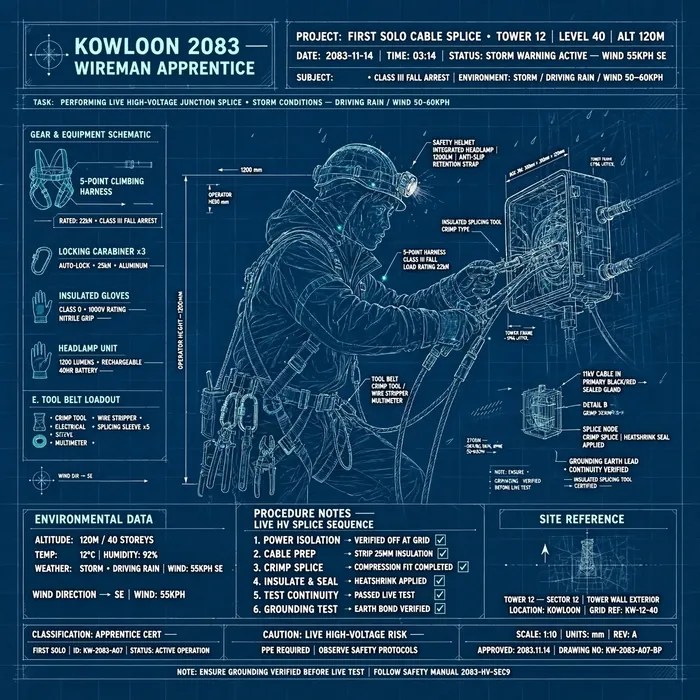
THE WIREMAN APPRENTICE
Seven years of apprenticeship for the first solo splice. Forty stories up, in a storm, with the whole city's dinner depending on your hands.
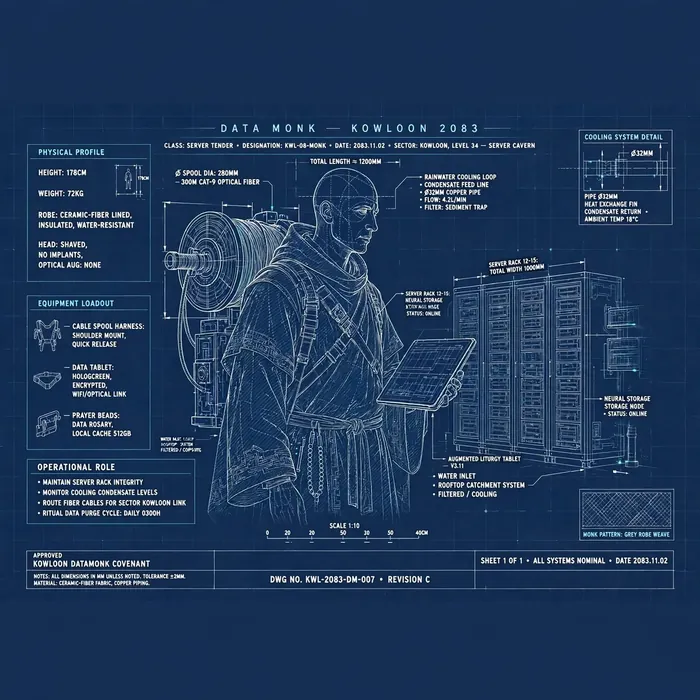
THE DATA MONK
No jurisdiction clearly applies inside the Expanse, so the servers live in the walls, cooled by captured rainwater. The monks tend them like a temple.
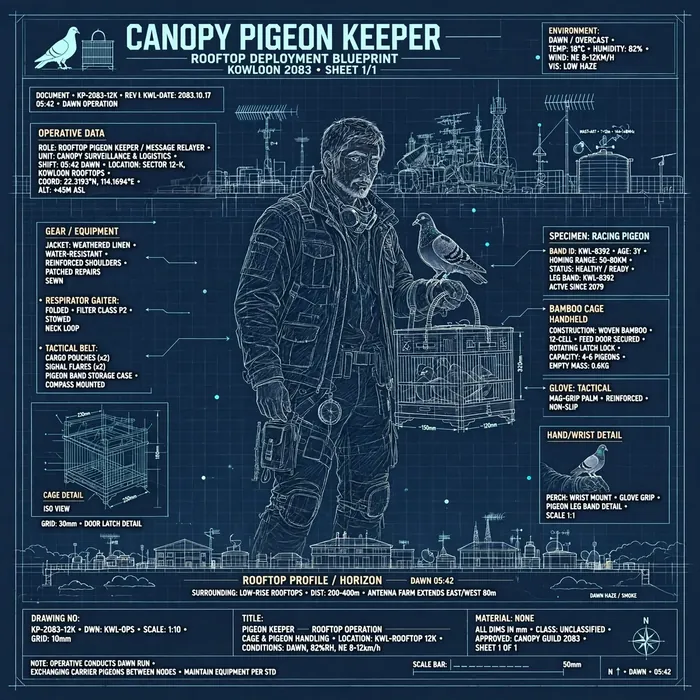
THE PIGEON KEEPER
Canopy dawn. Bamboo cages, a bird on the wrist, kilometers of rooftop below. The keeper's birds carry the invitations to the skybridge weddings.
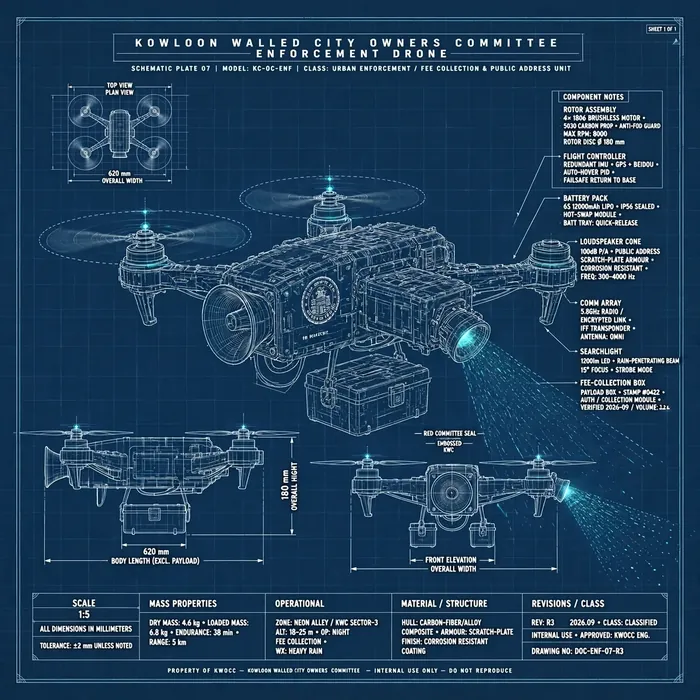
THE COMMITTEE DRONE
Dropped by the 九龍寨城業主委員會. It keeps order the way the Committee does everything: loudspeaker, searchlight, and a fee-collection box. The Stack Clans keep the peace. The Committee collects.
TAP ANY PLATE TO VIEW IT LARGE
CHAPTER 05 THE CITY IN 2083 — OBJECTS
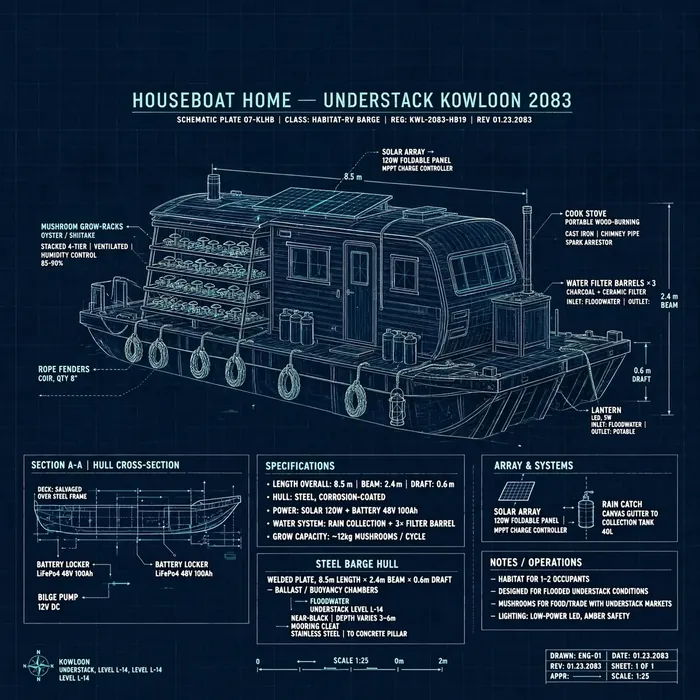
THE HOUSEBOAT
An RV on black water. The Understack's bottom floors are flooded, so some families stopped fighting the water and moved onto it — grow-racks, filter barrels, a stove with a chimney.
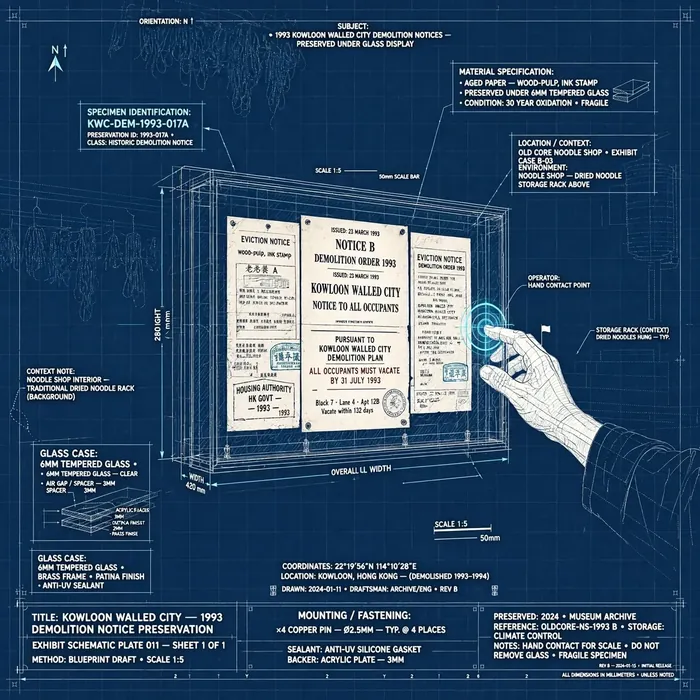
THE DEMOLITION NOTICES
The 1993 eviction orders, preserved under glass in an Old Core noodle shop. The demolition never came. Pilgrims touch the glass for luck.
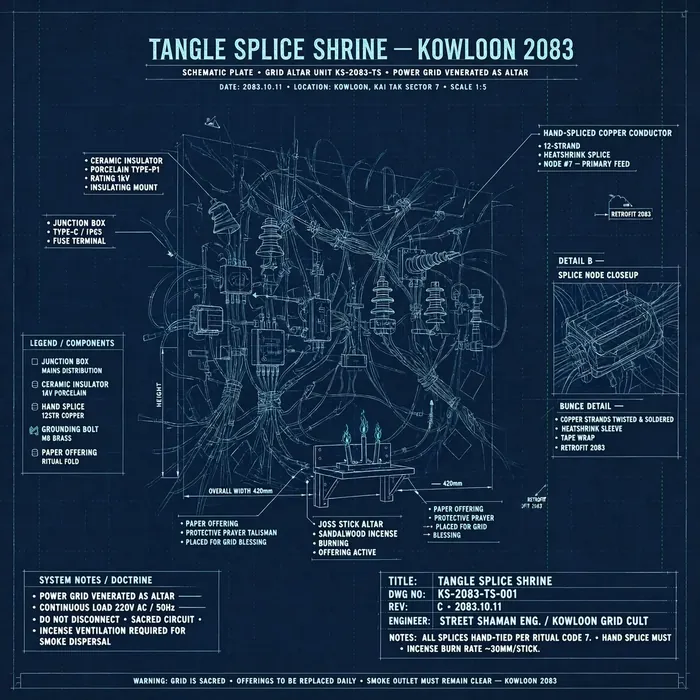
THE SPLICE SHRINE
A Tangle junction venerated as an altar. Joss sticks burn in front of the wires that keep the lights on. The grid provides; the grid is thanked.
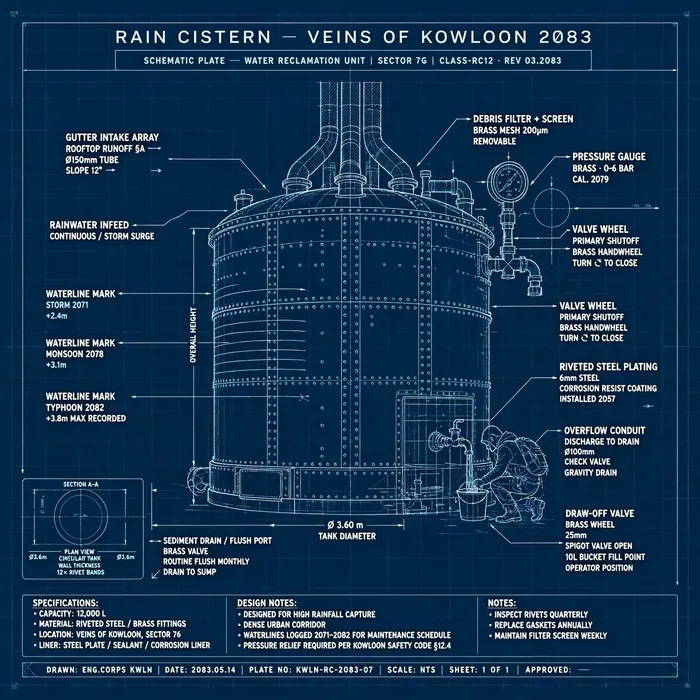
THE RAIN CISTERN
Rain is weather and infrastructure. The cisterns sing when it storms — every drop the city catches is a drop it doesn't have to buy.
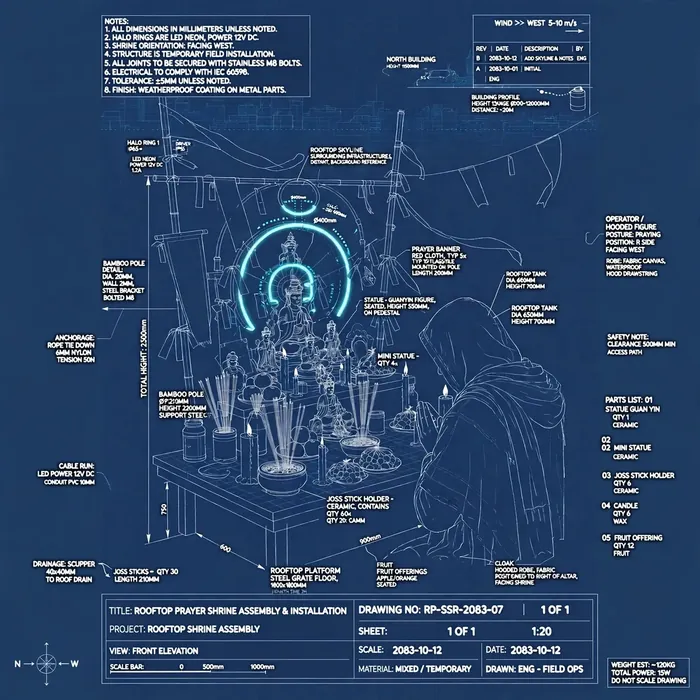
THE PRAYER SHRINE
A Canopy altar at dusk — joss sticks, offerings, photographs of the dead, fairy lights. Seen in Episode 3. The city's prayers, stacked against the sky.
TAP ANY PLATE TO VIEW IT LARGE
CHAPTER 06 WHO RUNS IT
Nobody. Everybody. The Stack Clans keep the peace and the water rota. The Wiremen tend the grid. The Cutters — unlicensed surgeons — have the best hands in Hong Kong. The Data Monks cool wall-servers with captured rainwater. And every day, the Fresh Concrete arrive.
The rule of this world: the City is not a ruin. It is alive, communal, and winning.